World Cup 2026 Streaming Guides & News

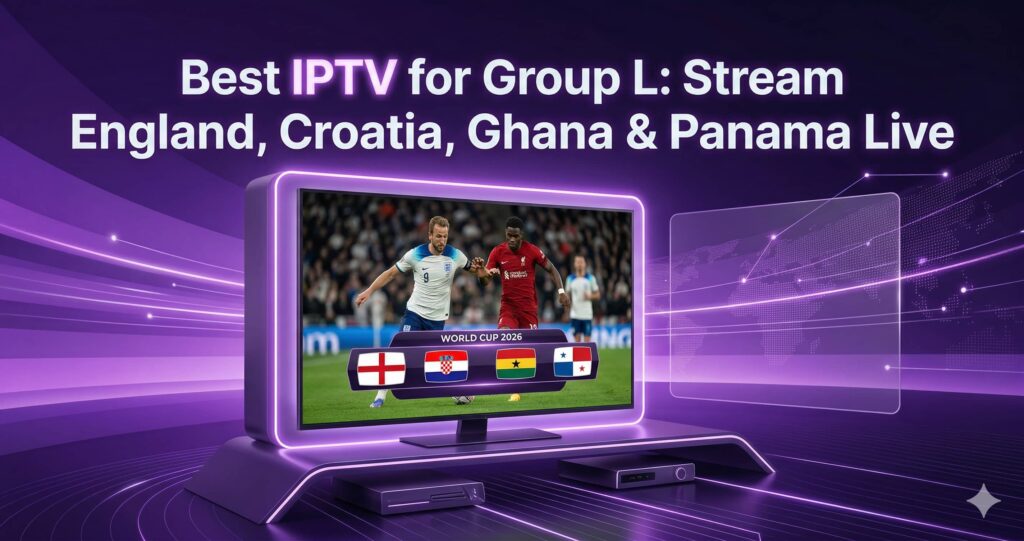
Best IPTV for Group L: Stream England, Croatia, Ghana & Panama Live
World Cup 2026 Streaming Guides & News

Best IPTV for Group L: Stream England, Croatia, Ghana & Panama Live

The 2026 FIFA World Cup is rapidly approaching, and the finalized draw has set the stage for one of the most exciting tournaments in the history of the sport. With 48 teams competing across the United States, Canada, and Mexico, the narratives and rivalries are richer than ever. Following the official group stage draw, the global spotlight has immediately fixated on Group L. This captivating quartet is headlined by the European heavyweights of England, the perennial tournament overachievers Croatia, the dynamic African powerhouses Ghana, and the gritty CONCACAF challengers Panama. Because Group L features the Three Lions, it is guaranteed to attract some of the highest global viewership numbers of the entire group stage. Millions of fans will be tuning in, which inevitably leads to congested local broadcasting servers and frustrating geo-blocks for expats and travelers. To ensure you don’t miss a single crucial moment, setting up your digital viewing hub is just as important as knowing the match schedule. Finding the best IPTV to watch World Cup 2026 Group L is the ultimate way to guarantee a flawless, buffer-free experience. Savvy football supporters are already bypassing restrictive cable packages by turning to premium, dedicated services like iptvworldcup2026.com. With your high-definition access secured, let us dive deep into the teams, the history, and the tactics that will define this unmissable group. Group L Team Analysis: Heavyweights and History-Makers Group L is a fascinating blend of familiar foes and historical rematches. It features two European teams that know each other intimately, an African side desperate to make a deep tournament run, and a Central American squad looking to secure their first-ever World Cup victory. England: The Three Lions’ Quest for Glory For England, the narrative heading into the 2026 World Cup is singular: it is time to deliver. Following a string of deep tournament runs—including a European Championship final and a World Cup semi-final—the pressure on the English national team is immense. Now under the tactical direction of Thomas Tuchel, the Three Lions arrive in North America with what is arguably the most talented squad in world football. The attacking wealth is staggering, featuring the creative brilliance of Jude Bellingham, the wide threat of Bukayo Saka, and the clinical finishing of their all-time top scorer, Harry Kane. Tuchel’s mandate is to transform England from a team that consistently reaches the latter stages into a team that can finally lift the trophy. Tactically, fans can expect a highly organized, possession-based approach that aims to control the tempo of the game and suffocate opponents in the midfield with players like Declan Rice. In Group L, England are the undeniable favorites to finish in the top spot. However, their opening fixture against Croatia is fraught with historical tension, and they must avoid any complacency against Ghana and Panama to ensure a smooth path into the knockout rounds. Croatia: The Masters of the Midfield Croatia has firmly established itself as the ultimate tournament team. Despite a relatively small population, they consistently punch above their weight on the global stage, reaching the final in 2018 and securing a third-place finish in Qatar 2022. While the iconic generation led by Luka Modrić has transitioned, the Croatian footballing identity remains incredibly strong. They produce technically gifted, tactically astute players who excel in high-pressure environments. The modern Croatian squad is built upon a rock-solid defense, marshaled by world-class talents like Joško Gvardiol, and a midfield that prioritizes ball retention and intelligent passing networks. They are incredibly difficult to break down and thrive in games of attrition. Their match against England is one of the marquee fixtures of the entire group stage—a rematch of their historic 2018 semi-final clash. Croatia will not be intimidated by the Three Lions’ star power, and they will view this group as highly navigable. Ghana: The Black Stars Rising Ghana represents one of the strongest forces in African football, bringing a rich history of World Cup heroics—most notably their heart-breaking quarter-final run in 2010. The Black Stars are known for their physical intensity, blistering pace on the counter-attack, and an incredible fighting spirit. They arrive in 2026 with a squad that perfectly blends experienced European-based professionals with exciting, raw talent emerging from the continent. Led by dynamic attacking players like Mohammed Kudus, Ghana has the ability to unlock any defense in the world on their day. Their challenge in Group L will be maintaining defensive discipline against the intricate passing of England and Croatia. They must capitalize on set-pieces and rapid transitions. Their fixtures against Croatia and Panama will be absolute battles, and Ghana will firmly believe they have the quality to secure a spot in the Round of 32. Panama: The Resilient Underdogs Panama returns to the World Cup stage looking to make history. Following their debut in 2018—where they famously celebrated their first-ever World Cup goal despite a heavy defeat to England—the team has grown in tactical maturity and regional confidence. Representing CONCACAF, they are familiar with the North American climate and will enjoy strong traveling support. As the clear underdogs in Group L, Panama will likely employ a deep, compact defensive block, aiming to frustrate their more illustrious opponents and strike through quick counter-attacks or physical set-pieces. While qualifying for the knockout stages would be a monumental upset, Panama’s primary goal will be to secure their first-ever victory at a FIFA World Cup. If they can turn their matches into gritty, physical contests, they have the potential to steal points and disrupt the group standings. Group L Schedule: Venues and Key Fixtures The Group L fixtures will take the teams to some of the most iconic stadiums across the Eastern United States and Canada, ensuring massive crowds and electric atmospheres. (Note: Specific kickoff times are subject to final FIFA broadcast confirmation). Matchday 1: The Heavyweight Clash England vs. Croatia (June 17, 2026) Venue: AT&T Stadium, Arlington, Texas This is a blockbuster opening match. The ghosts of the 2018 semi-final will loom large over this fixture. England will want to assert their
IPTV for world cup 2026 matches
World Cup 2026 Streaming Guides & News

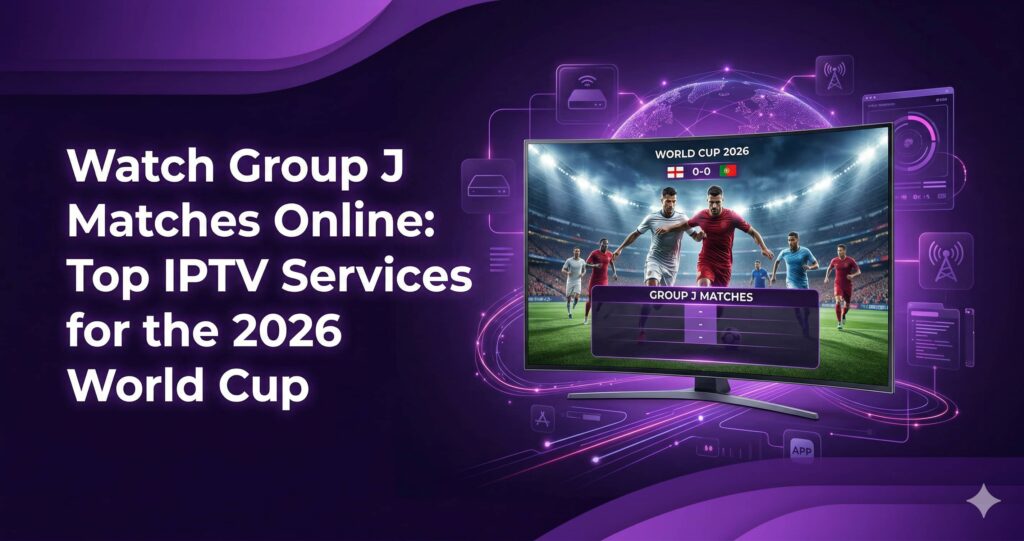
Watch Group J Matches Online: Top IPTV Services for the 2026 World Cup

The 2026 FIFA World Cup is poised to be the most expansive and spectacular sporting event in history. With the official draw completed, the global football community has immediately focused its attention on the groups that promise the highest drama, historical significance, and tactical intrigue. Among the 12 groups competing across North America, Group J stands out as a headline-maker. Featuring the reigning world champions Argentina, African powerhouse Algeria, European tactical dark horse Austria, and passionate tournament debutants Jordan, this group is a brilliant clash of continents. Because Group J features one of the most supported teams on the planet in Argentina, the global broadcasting demand for these specific fixtures will be unprecedented. Millions of fans will be scrambling to find reliable networks to watch Lionel Messi and his squad defend their crown. However, navigating expensive cable packages and regional geo-blocks can be incredibly frustrating. If you want guaranteed, buffer-free access to every match, setting up the best IPTV to watch World Cup 2026 Group J is a vital first step. Savvy cord-cutters are already optimizing their home entertainment setups using trusted platforms like iptvworldcup2026.com to ensure they don’t miss a single second of the action in stunning high definition. Let’s dive into the teams, the high-stakes schedule, and how to perfect your digital viewing experience. Group J Team Analysis: The Champions and the Challengers Group J is defined by the massive target on the back of La Albiceleste. Every team in this group will treat their match against Argentina as a cup final. But beyond the reigning champions, the battle for the crucial second automatic qualification spot promises to be a fierce, down-to-the-wire contest. Argentina: Defending the Crown Argentina arrives in the United States carrying the immense weight and glory of their 2022 triumph in Qatar. Under the masterful guidance of manager Lionel Scaloni, La Albiceleste have broken their decades-long trophy drought and established themselves as a modern footballing dynasty. The defining narrative for Argentina in 2026 is the pursuit of back-to-back titles—a feat not accomplished since Brazil in 1962. Furthermore, this tournament is widely expected to be the final World Cup appearance for the legendary Lionel Messi, adding massive emotional stakes to every single minute they play. Tactically, Argentina is far more than just a vehicle for their iconic captain. They boast a formidable, balanced squad. The midfield engine room, marshaled by Rodrigo De Paul and Enzo Fernández, provides relentless pressing and ball retention. Up front, the lethal finishing of Lautaro Martínez and Julián Álvarez ensures they can punish any defensive mistake. While they are the undeniable favorites to sweep Group J, the pressure of expectations can be heavy. They must navigate a highly physical Algerian side and a tactically suffocating Austrian team without dropping their intensity. Algeria: The Desert Foxes Return After the heartbreak of missing the 2022 tournament, Algeria returns to the World Cup stage with a fierce determination to prove they belong among the global elite. The Desert Foxes navigated the demanding African qualifiers with renewed focus, showcasing why they remain one of the most dangerous teams on their continent. They have a proud World Cup history, most notably pushing eventual champions Germany to the absolute limit in the 2014 knockout stages. Algeria’s playstyle is characterized by technical brilliance, rapid transitions, and immense physical strength in the midfield. They possess European-based attacking talent capable of creating moments of individual magic to unlock tight games. In Group J, their opening fixture against Argentina is a massive opportunity to make a global statement. If they can secure points against the reigning champions, they will be in prime position to battle Austria for a guaranteed spot in the Round of 32. Austria: The Tactical Disruptors If you are looking for a European dark horse in the 2026 World Cup, look no further than Austria. Since the appointment of tactical mastermind Ralf Rangnick, the Austrian national team has undergone a radical transformation. They have fully embraced the philosophy of “Gegenpressing”—a high-octane system built on suffocating the opponent high up the pitch, forcing immediate turnovers, and attacking vertically with ruthless efficiency. Austria is a nightmare to play against. They will not sit back and allow technically superior teams like Argentina to dictate the tempo. Instead, they will turn the match into a grueling physical and mental test. They have proven in European competitions that they can go toe-to-toe with heavyweights. Their critical Group J matchup against Argentina in Dallas will be a fascinating tactical chess match between Scaloni’s possession-based control and Rangnick’s organized chaos. Austria fully expects to advance deep into the knockout rounds. Jordan: The Historic Debutants Every World Cup delivers a Cinderella story, and in 2026, the nation of Jordan steps into that role. Making their first-ever appearance at a FIFA World Cup, Jordan’s qualification is the culmination of years of steady improvement and a spectacular recent run in the Asian Cup. For the “Chivalrous Ones,” simply stepping onto the pitch in North America is a historic national achievement. As the lowest-ranked team in the group, Jordan carries absolutely zero pressure. They are the ultimate wildcard. They rely on deep, organized defensive blocks, immense national pride, and a fearless counter-attacking mindset. Every point they earn, and every goal they score, will be celebrated back home. While advancing past the group stage is a monumental task, Jordan is more than capable of frustrating their opponents and acting as the group’s kingmakers by snatching unexpected points. Group J Schedule: Venues and Key Fixtures The Group J schedule takes the teams to some of the most impressive stadiums in the United States, primarily focusing on the Central and Western time zones. Travel logistics and adapting to different climates will play a subtle but important role. (Note: Specific kickoff times are subject to final broadcast confirmation). Matchday 1: Establishing the Hierarchy Argentina vs. Algeria (June 16, 2026) Venue: Arrowhead Stadium, Kansas City The defending champions kick off their campaign in the American heartland. Arrowhead Stadium will be a sea of blue

IPTV for Group G: 2026 World Cup
World Cup 2026 Streaming Guides & News

Best IPTV for Group G: 2026 World Cup Broadcasting Channels & Setup

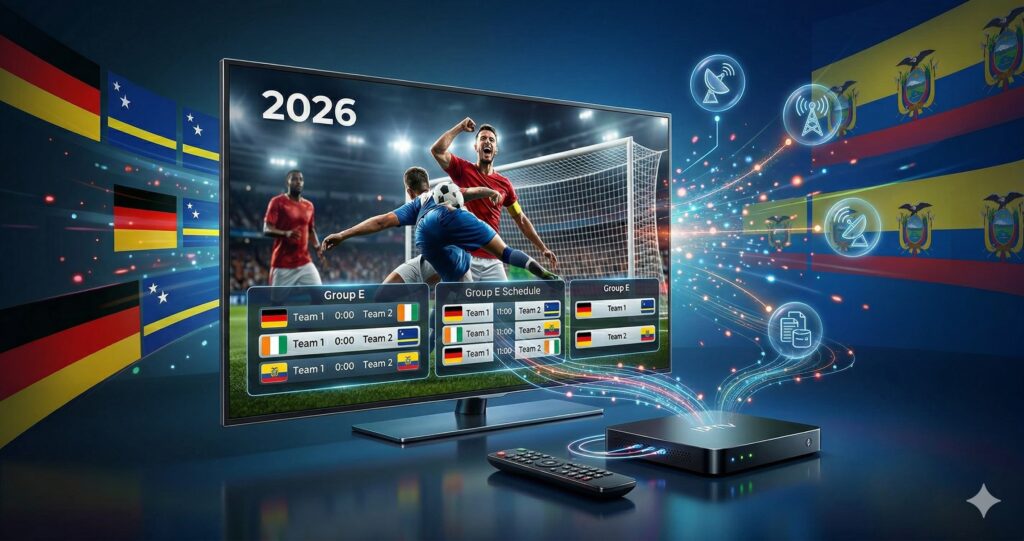
The FIFA World Cup 2026 is poised to be a monumental event, bringing the beautiful game to stadiums across the United States, Canada, and Mexico in an unprecedented 48-team format. Following the highly anticipated draw, fans and analysts alike have zeroed in on the groups that promise the most diverse clash of footballing cultures. Group G stands out as a truly global microcosm of the sport, featuring European powerhouse Belgium, African royalty Egypt, Asian stalwarts Iran, and Oceania’s dominant force, New Zealand. With matches scheduled along the scenic and vibrant West Coast of North America—specifically in Seattle, Los Angeles, and Vancouver—the atmosphere surrounding this group will be electric. However, the expansive nature of the tournament also means that securing reliable broadcasting access is a priority. Fragmented TV rights and regional geo-restrictions can make following a specific group incredibly frustrating for dedicated fans. If you want to bypass these hurdles and ensure a flawless viewing experience, securing the best IPTV to watch World Cup 2026 Group G is the ultimate solution. Thousands of smart viewers are already preparing their setups with premium, buffer-free streams from trusted platforms like iptvworldcup2026.com. With your digital access sorted, let’s delve into the teams, tactics, and broadcasting channels that will define Group G. Meet the Teams: A Deep Dive into Group G Group G is a fascinating puzzle. It lacks the traditional “Group of Death” label, which makes it arguably more unpredictable. While Belgium is the heavy favorite to claim the top spot, the battle for the crucial second qualification place will be fiercely contested among three teams with very different tactical philosophies. 🇧🇪 Belgium: The Red Devils’ New Era For the past decade, Belgium has been defined by its “Golden Generation”—a squad packed with world-class talent that consistently ranked at the top of the FIFA standings but ultimately fell short of lifting major silverware. The 2026 tournament marks a definitive transition. While iconic playmakers like Kevin De Bruyne and elite finishers like Romelu Lukaku may still offer their immense experience, the team is increasingly relying on an explosive new wave of talent, featuring dynamic wingers like Jérémy Doku and robust midfielders. Tactically, Belgium under Domenico Tedesco has shifted towards a more pragmatic, highly transitional style of play. They are lethal on the counter-attack and possess the individual brilliance to unlock deep defensive blocks. In Group G, Belgium is expected to dominate possession against all three opponents. The challenge for the Red Devils will be maintaining focus and breaking down teams that will inevitably park the bus against them. Taking all nine points is the expectation back in Brussels. 🇪🇬 Egypt: The Pharaohs Chasing Glory Egypt is the undisputed king of African football, holding a record number of Africa Cup of Nations (AFCON) titles. However, translating that continental dominance onto the global stage has historically been a challenge for the Pharaohs. With an expanded World Cup format, Egypt seized the opportunity during the CAF qualifiers, arriving in North America determined to make a deep run into the knockout stages. The Egyptian tactical setup often relies on structural solidity, a disciplined midfield pivot, and rapid transitions heavily routed through their talismanic forwards. While Mohamed Salah’s legendary presence has defined them for years, a new generation of Egyptian talent from domestic giants like Al Ahly and Zamalek, as well as European leagues, provides a more balanced threat. Against teams like Iran and New Zealand, Egypt will look to dictate the tempo. Against Belgium, they will rely on their defensive resilience and aim to strike through blistering counter-attacks. 🇮🇷 Iran: Team Melli’s Defensive Mastery Iran has been one of the most consistent teams in Asian football for decades, making regular appearances at the World Cup. Under various managers, “Team Melli” has cultivated a reputation as an incredibly difficult team to break down. They are masters of the low block, incredibly disciplined, and physically robust in the tackle. However, modern Iranian football is not just about defending. With elite forwards like Mehdi Taremi and Sardar Azmoun leading the line, Iran possesses genuine, top-tier attacking firepower capable of punishing any defensive lapse. In Group G, Iran’s match against Egypt will be a monumental clash of styles and could very well dictate who advances alongside Belgium. They will relish the physical battle against New Zealand and will look to frustrate Belgium’s playmakers by denying them space in the final third. 🇳🇿 New Zealand: The All Whites’ Opportunity As the primary powerhouse of the Oceania Football Confederation (OFC), New Zealand often faces a unique challenge: dominating their regional qualifiers but facing a massive step up in quality when reaching the intercontinental playoffs or the World Cup itself. The 2026 format provided a more direct path, and the All Whites are ready to showcase their evolution on the global stage. New Zealand’s traditional strength lies in their physicality, aerial dominance, and organizational discipline. Led by veteran strikers like Chris Wood, they are exceptionally dangerous from set-pieces and crosses into the box. While they are the underdogs in Group G, their physical style of play could severely disrupt the rhythm of their more technical opponents. If they can turn matches into gritty, physical contests, they have the potential to snatch vital points and shock the footballing world. Group G Match Schedule and Key Fixtures The geographical spread of the 2026 World Cup is vast, but Group G teams are fortunate to have their group stage matches concentrated on the West Coast. Playing in world-class venues like SoFi Stadium in Los Angeles, Lumen Field in Seattle, and BC Place in Vancouver means fans are in for spectacular backdrops and perfect playing conditions. (Note: Specific kick-off times are subject to final FIFA broadcast confirmation). Matchday 1: Establishing Dominance 🇮🇷 Iran vs. 🇳🇿 New Zealand (Mid-June, Los Angeles) A critical opening fixture at the magnificent SoFi Stadium. Both teams will view this as their most winnable game of the group. Iran will look to use their superior technical experience in the final third, while New Zealand will

Complete Group C Schedule: Watch World Cup 2026 via IPTV & Kodi
World Cup 2026 Streaming Guides & News

Complete Group C Schedule: Watch World Cup 2026 via IPTV & Kodi

The anticipation for the FIFA World Cup 2026 is reaching a fever pitch. As the first-ever 48-team tournament, hosted across Canada, Mexico, and the USA, it promises unmatched spectacle. While every group has its narratives, Group C has emerged as a truly fascinating collection of footballing cultures. Featuring the iconic samba style of Brazil, the disciplined flair of Morocco, the gritty passion of Scotland, and the historic resilience of Haiti, this group is a must-watch event. For modern fans, navigating the fragmented landscape of sports broadcasting can be a challenge. If you want to ensure you catch every dribble from Vinícius Jr. or every defensive masterclass from Morocco without being tied to expensive cable contracts, planning your streaming setup is essential. Thousands of viewers are already preparing by identifying the best IPTV to watch World Cup 2026 Group C. For a reliable, high-definition experience that aggregates global coverage, explore the options available at iptvworldcup2026.com. Once your connection is secured, read on for the definitive guide to Group C. Group C: A Global Clash of Styles Group C is defined by its diversity. It’s not just a battle for points; it’s a collision of different philosophies, history, and expectations. From a perennial favorite chasing their sixth star to a nation making a historic return, the narratives are rich and compelling. Brazil: The Perennial Favorites Joga Bonito Brazil enters every World Cup with a single objective: to win. The Seleção are synonymous with World Cup history, holding a record five titles. In 2026, they will be looking to end a significant drought since their last victory in 2002. Brazil combines technical brilliance with incredible depth. In Group C, they are the undisputed heavyweights and are widely expected to not just qualify, but to top the group with maximum points. Brazil’s squad in 2026 will likely be a perfect blend of experienced leaders and explosive young talent. Fans can expect to see their trademark Joga Bonito—the beautiful game—characterized by creative attacking, fluid movement, and individual brilliance on the ball. Their challenge in Group C will be maintaining focus against highly disciplined defensive units, particularly Morocco, who will look to frustrate them. Morocco: The Atlas Lions’ Ambition Morocco was the feel-good story of the 2022 World Cup, becoming the first African and Arab nation to reach the semi-finals. They proved that with tactical discipline, incredible work rate, and a unified spirit, they can compete with—and defeat—the world’s best. In Group C, Morocco is no longer an underdog that will be taken lightly; they are a formidable force with ambitions to replicate, or even surpass, their 2022 heroics. The strength of the Atlas Lions lies in their defensive organization and their lightning-fast transition play. They excel at absorbing pressure and hitting opponents on the counter. Their matches against Brazil and Scotland will be tactical chess matches, where the Moroccan defense will be severely tested by World Class attacking flair and physical play. Scotland: Passion, Pride, and Progress Scotland returns to the world stage with incredible passion and a renewed sense of purpose. Scottish football has seen a significant resurgence in recent years, producing a disciplined, hard-working team that is incredibly difficult to break down. For Scotland, qualifying for 2026 is a massive achievement, and they will be roared on by one of the most passionate fanbases in the world, the “Tartan Army.” Scotland’s game plan revolves around teamwork, physical presence, and capitalizing on set-pieces. They play with immense pride and work rate. In Group C, Scotland will target their match against Haiti as a mandatory win, while looking to grind out results against Brazil and Morocco through sheer determination and tactical rigidity. Haiti: The Historic Returnees Haiti is the wildcard and the heartwarming narrative of Group C. Making their long-awaited return to the World Cup stage, Haiti’s qualification is a testament to the country’s love for the sport and the resilience of its people. As massive underdogs, they have absolutely nothing to lose and will play with pure heart and joy. Haiti’s play is often characterized by technical skill, unpredictable attacking flair, and immense speed. While they may lack the tactical experience of their Group C opponents, their enthusiasm and “X-factor” potential make them a dangerous opponent that can punish any complacency. Every goal they score will be celebrated as a historic moment for the nation. Complete Group C Schedule (June 2026) Mark your calendars! The fixtures in Group C are balanced to build tension, culminating in what could be decisive final matchday. (All dates are approximate pending final confirmation from FIFA). Matchday 1: The Opening Statements Brazil vs. Haiti (June 13, 2026) A fascinating opening matchup. Haiti will be full of emotion, but they face the ultimate test against a Brazilian team looking to make a statement. Fans can expect Brazil to control possession and showcase their attacking flair, while Haiti will look to use their speed on the counter. It’s a classic David vs. Goliath clash. Morocco vs. Scotland (June 13, 2026) This is perhaps the most intriguing match of the opening round. Morocco’s tactical discipline vs. Scotland’s gritty determination. This game could dictate who secures the crucial second qualifying spot. Expect a cagey, tactical battle where mistakes will be costly. Matchday 2: Pressures and Pivots Scotland vs. Haiti (June 18, 2026) This is Scotland’s must-win match. They will rely on their physicality and tournament experience to secure three points. For Haiti, this is a prime opportunity to score a historic goal and potentially pull off a massive upset if Scotland shows any signs of nerves. Brazil vs. Morocco (June 19, 2026) A true heavyweight clash. This match could decide the group winner. Morocco’s superb defense will be tested by Brazil’s world-class attackers. If Morocco can repeat their 2022 defensive heroics and frustrate the Seleção, this could be one of the matches of the tournament. Matchday 3: The Final Reckoning Scotland vs. Brazil (June 24, 2026) A clash that will evoke historic memories. Scotland must bring their absolute best to get a result

World Cup 2026 Streaming Guides & News

FIFA World Cup 2026 Group B Guide: Teams, Schedule & Live Stream

For football fans, preparing for a tournament of this magnitude means securing your viewing setup well in advance. If you are looking for the most reliable way to catch every tackle, goal, and dramatic finish without relying on expensive and restrictive cable packages, finding the best IPTV to watch World Cup 2026 Group B is a top priority. Many savvy fans are already turning to trusted platforms like iptvworldcup2026.com for high-definition, buffer-free live streams of all the action. With your viewing experience secured, let’s dive deep into what makes Group B a must-watch spectacle. Meet the Competitors: A Deep Dive into Group B Group B is a unique mix of home-field advantage, redemption arcs, and seasoned tournament experience. Unlike groups dominated by traditional South American or European powerhouses, Group B is incredibly balanced, making it one of the hardest to predict. Here is a closer look at the four teams battling for a spot in the knockout stages. 🇨🇦 Canada: The Ambitious Co-Hosts For the Canadian Men’s National Team, 2026 is the culmination of a decade-long project to elevate football in a hockey-crazed nation. After breaking a 36-year World Cup drought by qualifying for Qatar 2022, Canada gained invaluable, albeit harsh, experience on the global stage. Now, sharing hosting duties with the USA and Mexico, Canada steps onto the pitch with the roar of a home crowd behind them. The Canadian squad boasts a golden generation of talent. With explosive pace on the flanks and clinical finishing up top, their counter-attacking potential is lethal. The key to Canada’s success in Group B will be their ability to transition from being a plucky underdog to a team that can dictate play and break down disciplined defenses. The home advantage cannot be overstated; playing in familiar climates and time zones, surrounded by a sea of red, will provide a massive psychological boost. To advance, Canada must secure maximum points against Qatar and the Playoff winner, setting up a heavyweight clash with Switzerland. 🇶🇦 Qatar: The Quest for International Redemption Qatar arrives in North America with a point to prove. As the host nation in 2022, they suffered a disappointing group-stage exit, failing to register a point. However, writing Qatar off based solely on that performance would be a critical mistake. They are the reigning back-to-back AFC Asian Cup champions (2019 and 2023), proving they are undisputed heavyweights within their own confederation. Qatar’s style is built on technical proficiency, quick passing networks, and a deep understanding among the core group of players who have been nurtured through the Aspire Academy together for years. They play with a cohesive, unit-first mentality. The challenge for Qatar in Group B will be matching the physicality of the European and North American teams. If they can impose their possession-based game and avoid being out-muscled in the midfield, Qatar has the tactical discipline to frustrate their opponents and snatch crucial points on the counter. 🇨🇭 Switzerland: The Consistent European Force If there is one word to describe the Swiss national team over the last decade, it is “consistent.” Switzerland has become a fixture in the knockout stages of major international tournaments, routinely navigating tricky groups with a blend of tactical intelligence, robust defending, and moments of individual brilliance. They are the undeniable favorites to top Group B on paper. The Swiss team is traditionally built on a rock-solid spine, featuring an experienced goalkeeper, a no-nonsense central defensive pairing, and a tireless midfield engine room. Their experience in navigating European qualifiers and major tournaments gives them a distinct edge in high-pressure situations. They are rarely overawed by the occasion. However, Switzerland occasionally struggles to break down teams sitting in a deep defensive block. Against teams like Canada and Qatar, who might deploy counter-attacking strategies, the Swiss will need their creative playmakers to unlock tight spaces. The European Playoff Winner: The Wildcard (Italy / Wales / Bosnia / Northern Ireland) The fourth slot in Group B adds a massive layer of suspense, as it belongs to the winner of a grueling European Playoff path. The identity of this team will drastically alter the dynamics of the group. Italy: If the Azzurri navigate the playoffs, they instantly become group favorites alongside Switzerland. Desperate to avenge their shocking failure to qualify for the 2018 and 2022 World Cups, a motivated Italy brings tactical mastery, defensive grit (Catenaccio roots), and world-class talent that could sweep Group B. Wales: Transitioning into a new era, Wales relies on immense national pride, physical resilience, and a passionate traveling fanbase. They are gritty competitors who excel in tournament formats by making themselves incredibly difficult to beat. Bosnia & Herzegovina / Northern Ireland: Should either of these nations emerge victorious, they will be viewed as underdogs but dangerous ones. Both teams play with incredible physical intensity and defensive structure, capable of dragging heavy favorites into frustrating, low-scoring draws. Group B Matches: The Fixture Schedule The schedule for Group B is tightly packed between June 12 and June 24, 2026. In a tournament where travel across North America can be exhausting, managing squad rotation and fatigue over these two weeks will be vital for the managers. Matchday 1: Setting the Tone 🇨🇦 Canada vs. European Playoff Winner This is a monumental opening fixture for the co-hosts. Canada must capitalize on their home-field energy immediately. If they face a heavyweight like Italy, a draw would be a massive result. If they face Wales, Bosnia, or Northern Ireland, anything less than three points will be seen as a missed opportunity to set the pace in the group. 🇶🇦 Qatar vs. 🇨🇭 Switzerland A fascinating clash of styles. Switzerland will look to dominate possession and physically impose themselves, while Qatar will aim to absorb pressure and hit back with rapid transitions. For Qatar, avoiding defeat here is crucial to keeping their advancement hopes alive, while the Swiss will view this as a mandatory three points. Matchday 2: The Critical Juncture European Playoff Winner vs. 🇨🇭 Switzerland This all-European affair could very

Why IPTV Is the Best Option for Watching World Cup 2026
World Cup 2026 Streaming Guides & News

Why IPTV Is the Best Option for Watching World Cup 2026 Abroad

For millions of football fans, the 2026 World Cup is a “bucket list” event. However, for those living abroad—whether you are an expat in Europe, a digital nomad in Southeast Asia, or a traveler on a business trip in the Middle East—watching the tournament can be a logistical nightmare. Regional broadcasting rights often mean your favorite commentators are blocked, and local cable packages are both expensive and difficult to cancel. In 2026, **Internet Protocol Television (IPTV)** has emerged as the definitive solution for the global fan. It bypasses the traditional limitations of geography and hardware, providing a “borderless” viewing experience. This 1,600+ word educational guide explores why IPTV is technically superior for watching the World Cup abroad and how to optimize your setup for international travel. 1. Bypassing “Geo-Blocks” with Global Access Broadcasting rights for the World Cup are sold on a country-by-country basis. If you are a British expat in Spain, you may find that local Spanish broadcasters have exclusive rights, meaning you cannot access the BBC iPlayer or ITVX without facing a “Not available in your region” error. IPTV solves this through **Global Channel Aggregation**. A premium IPTV service in 2026 doesn’t just give you local channels; it gives you the “Master Feed” for hundreds of countries. The Benefit: You can watch the England match with BBC commentary, the Brazil match with Globo coverage, or the USA match via FOX, regardless of which country you are currently standing in. Technical Note: Because IPTV streams over the internet (IP), it doesn’t rely on a physical satellite footprint. As long as you have an internet connection, you have access to your home country’s specific broadcast style and language. 2. Cost Efficiency for Short-Term Stays Traditional cable and satellite providers in most countries require long-term contracts (often 12 to 24 months) and professional installation. For an expat on a 6-month contract or a traveler staying for the duration of the tournament, this is financially impossible. Feature Local Foreign Cable Premium IPTV Abroad Contract 12-24 Months (Standard) Month-to-Month (Flexible) Installation Required (Box + Dish/Cable) Zero (App-based) Portability Fixed to one address Works on Phone, Laptop, & Hotel TV Average Cost $80 – $120 / month $15 – $25 / month Educational Insight: For the price of one month of traditional cable in a foreign country, you can often secure an entire year of IPTV, covering the World Cup and every other major sporting event in 2026. 3. The Power of “Catch-Up” for Different Time Zones The World Cup 2026 is hosted in North America. This creates a significant “Time Zone Gap” for fans in Europe, Africa, and Asia. A match kicking off at 8:00 PM in Los Angeles will be 4:00 AM in London and 7:00 AM in Dubai. Catch-Up TV is the expat’s best friend. Premium IPTV services in 2026 record the matches on their servers automatically. You don’t need to leave your device on overnight to “record” the game. You can simply wake up, scroll back in your TV guide to the 4:00 AM slot, and hit play. This “time-shifting” technology ensures you never have to choose between your sleep and your team. 4. Multi-Language Commentary: Feeling at Home For an expat, hearing the match in your native language is part of the emotional experience. Watching the World Cup with local foreign commentary can feel isolating. IPTV allows you to choose your experience. Arabic Fans: Access beIN Sports from anywhere. Spanish/Latin Fans: Access Telemundo or TyC Sports. French Fans: Access TF1 or Canal+. This variety ensures you get the cultural nuances, the hometown bias, and the specific analysis you grew up with, which is something a local foreign broadcaster can never provide. 5. Optimization: The Role of VPNs for Travelers When you are abroad, your “Digital Identity” (IP Address) changes. Some IPTV providers use IP Locking for security, which can prevent your service from working when you move to a new country. Furthermore, hotel Wi-Fi networks often block “Streaming” ports to save bandwidth. Using a VPN with IPTV in 2026: A VPN (Virtual Private Network) is an essential tool for the traveler. It creates an encrypted tunnel between your device and a server in your home country. Bypass Hotel Restrictions: The VPN masks your traffic, so the hotel router cannot tell you are streaming 4K video. Maintain “Home” Access: By connecting to a VPN server in your home city, you appear to your IPTV provider as if you never left home, preventing security flags. Prevent ISP Throttling: Many international ISPs (especially in developing regions) intentionally slow down international video traffic. A VPN encrypts these packets, preventing the ISP from identifying and slowing your World Cup stream. 6. Hardware Portability: Your Stadium in a Suitcase Traditional TV requires a box and a screen. For the traveler, your “box” is a Firestick, a Laptop, or even your Smartphone. Modern IPTV players like TiviMate or IPTV Smarters Pro are designed to be lightweight. You can plug a Firestick into any hotel TV HDMI port, connect to the Wi-Fi (plus your VPN), and within two minutes, you have a 4K sports bar in your hotel room. This level of portability is what makes IPTV the superior choice for the 2026 tournament. 7. Technical Readiness: Dealing with “Public Wi-Fi” Jitter Public Wi-Fi in airports or hotels is notoriously unstable. This causes **Jitter**, which leads to buffering. To avoid this while abroad, follow these technical education steps: Increase Buffer Size: In your IPTV app settings, set the buffer to 4 or 5 seconds. This creates a larger “reservoir” of video, so if the hotel Wi-Fi dips for a second, the match keeps playing. Use a Travel Router: Devices like the GL.iNet Slate AX allow you to connect to the hotel Wi-Fi and then broadcast your own private, secured, and VPN-enabled network to all your devices. Lower Resolution if Necessary: On a laptop or phone screen, the difference between 4K and 1080p is small. If you are on a weak international connection, lowering the quality to

Common IPTV Problems During World Cup 2026
World Cup 2026 Streaming Guides & News

Common IPTV Problems During World Cup 2026: Solutions for Match Day

The 2026 World Cup is a period of immense traffic for global streaming servers. Even with a premium service, the sheer volume of simultaneous 4K requests can lead to technical hiccups. When you are moments away from a kickoff, you don’t have time for long support tickets; you need immediate, technical solutions. This educational guide breaks down the four most common IPTV failures—app crashes, channel downtime, EPG errors, and login failures—and provides the professional “quick-fixes” to get you back into the game before the next whistle. 1. The App Crash: “Force Close” and Memory Management During a high-bitrate live broadcast, your streaming device (Firestick, Shield, or Smart TV) is working at its thermal limit. If the app suddenly freezes or kicks you back to the home screen, it is usually due to a RAM Overflow or a Cache Conflict. How to Fix It: Clear the App Cache: Go to your device Settings > Apps > [Your Player App] > Clear Cache. This deletes temporary files that may have become corrupted during the stream. Force Stop Background Apps: Use a “Background Apps” manager or manually stop apps like YouTube, Netflix, or Spotify. These consume RAM that your IPTV player needs for the 4K buffer. The 60-Second Hard Reset: Unplug your streaming device from the power source for a full minute. This clears the system memory (RAM) and resets the hardware’s internal clock. 2. Channel Down: “404” or “Black Screen” If your primary channel goes dark right as the anthem starts, don’t panic. In 2026, most World Cup providers use Dynamic Linking. This means they can move the stream to a new server to avoid a takedown or a crash. Technical Troubleshooting: The “Update Playlist” Command: Go to your app settings and click “Update Playlist” or “Refresh Content.” This forces the app to pull the newest, working URLs from the provider’s server. Switch the Video Decoder: Sometimes the “Hardware” decoder fails on a specific stream. Go to Settings > Player > Decoder and switch to “Software” or “Native.” While this uses more CPU, it often brings a “dead” channel back to life. The Alternate Feed Strategy: Every World Cup match is broadcast by dozens of countries. If “USA – FOX” is down, try the UK (BBC), Canada (TSN), or an Arabic feed (beIN). The match is the same; only the commentary changes. 3. EPG Issues: “No Information” or Incorrect Times An Electronic Program Guide (EPG) that shows the wrong match time or simply says “No Information” makes it impossible to use features like Catch-Up or Recording. How to Fix EPG Errors: Time Zone Offset: Go to Settings > EPG > EPG Timeshift. If the match says it starts at 4 PM but it’s actually 2 PM, adjust the offset by -2.0. This fixes the alignment without needing a server update. Clear EPG Data: Sometimes the guide data gets “stale.” Find the “Clear EPG” button in your settings, then click “Update EPG.” This wipes the old database and downloads a fresh schedule. Check the “tvg-id”: If you are a pro user editing your own M3U, ensure the tvg-id in your file matches the ID in the EPG source. A single missing letter will result in “No Information.” 4. Login Errors: 401, 403, and Server Connection Failed Login errors usually happen when the provider’s “Handshake Server” is under heavy load. However, it can also be a sign of an ISP Block. Error Code The Fix 401 Unauthorized Check for typos or an expired subscription. Try logging in on a second device to verify. 403 Forbidden This is usually an ISP block. Turn on your VPN immediately to mask your traffic. Server Connection Failed Reboot your router. Your IP might be temporarily “soft-banned” for too many refresh requests. 5. Preventing the “Match Day” Disaster The best way to fix a problem is to prevent it. Follow this educational “Pre-Flight” checklist 1 hour before the World Cup kickoff: Verify VPN: Ensure your VPN is connected to a “Streaming Optimized” server near your location. Update App: Ensure you are using the latest 2026 version of TiviMate or Smarters. Check Ethernet: Unplug and replug your Ethernet cable to ensure a solid physical connection. Refresh Guide: Perform a manual EPG update to see the latest knockout-stage match times. Conclusion Technical issues during the 2026 World Cup are often the result of unprecedented global demand. By understanding the basics of Cache Management, Decoder Switching, and DNS/VPN usage, you can troubleshoot 99% of common problems in under two minutes. Preparation is the difference between watching the goal and staring at a loading screen. Secure your setup, know your error codes, and enjoy the tournament.

World Cup 2026 Match Schedule
World Cup 2026 Streaming Guides & News

World Cup 2026 Match Schedule and How to Watch Every Game on IPTV

The FIFA World Cup 2026 is officially here, and it is making history as the largest edition ever. For the first time, 48 nations are competing in 104 matches across 16 host cities in the United States, Canada, and Mexico. With games spread across multiple time zones and three massive countries, staying organized is the only way to ensure you don’t miss a single goal. In 2026, the traditional “cable bundle” has been replaced by more flexible, high-performance streaming solutions. This educational guide provides the essential match schedule for the tournament and a technical roadmap on how to use IPTV to access every broadcast, from the opening whistle in Mexico City to the grand final in New York/New Jersey. 1. Key Dates and Tournament Structure The 2026 tournament follows a new, expanded format. Teams are divided into 12 groups of four. The top two from each group, along with the eight best third-place finishers, will advance to the brand-new Round of 32. Group Stage: June 11 – June 27, 2026 Round of 32: June 28 – July 3, 2026 Round of 16: July 4 – July 7, 2026 Quarter-finals: July 9 – July 11, 2026 Semi-finals: July 14 – July 15, 2026 Third-place Play-off: July 18, 2026 The Final: July 19, 2026 (MetLife Stadium, East Rutherford) 2. World Cup 2026 Match Schedule: High-Profile Fixtures While the full schedule contains 104 matches, several marquee encounters and host-nation games are the primary focus for global audiences. Below are the confirmed details for the opening rounds: Date (2026) Fixture Venue / City Group June 11 Mexico vs. South Africa (Opener) Estadio Azteca, Mexico City Group A June 12 USA vs. Paraguay SoFi Stadium, Los Angeles Group D June 12 Canada vs. Italy/Wales Playoff Winner BMO Field, Toronto Group B June 13 Brazil vs. Morocco MetLife Stadium, NY/NJ Group C June 17 England vs. Croatia AT&T Stadium, Dallas Group L June 19 USA vs. Australia Lumen Field, Seattle Group D 3. How to Watch the World Cup 2026 via IPTV IPTV (Internet Protocol Television) is the most efficient way to access international broadcasts during the World Cup. Because the tournament is global, different broadcasters provide varying levels of analysis, commentary, and visual quality. To watch every game, you need to know which channels to target within your IPTV player. Primary Channels for English Commentary: USA: FOX and FS1 (English), Telemundo and Universo (Spanish). United Kingdom: BBC One and ITV1. Matches are shared between these two broadcasters, with both offering high-quality 4K UHD streams on their digital platforms (iPlayer and ITVX). Canada: TSN and CTV. Australia: SBS (which traditionally offers free-to-air coverage for every match). International Feeds for Tactical Variety: One of the best features of IPTV is accessing feeds from a team’s home country. In 2026, many fans are choosing to watch matches on beIN Sports (MENA) for their world-class studio analysis or TF1 (France) and ARD/ZDF (Germany) for deep tactical breakdowns. 4. Technical Optimization for the 104-Match Marathon The 2026 World Cup is a “marathon” of data. To ensure your IPTV setup doesn’t fail during the knockout rounds, follow these technical education steps: A. Managing Multiple Streams During the final group stage matches (June 24–27), games in the same group are played simultaneously to prevent collusion. To watch both at once, you need an IPTV app that supports Multi-screen (Picture-in-Picture). We recommend using TiviMate Premium on a device with at least 3GB of RAM, such as the NVIDIA Shield Pro, to handle two 4K streams side-by-side. B. Beating the “Time Zone” Challenge with Catch-Up With matches taking place across the North American continent, kick-off times will vary wildly for international viewers. If a match kicks off at 3:00 AM your time, ensure your IPTV provider offers 7-Day Catch-Up. This allows you to wake up and play the full match recording directly from your TV guide without needing to set a manual recording. C. Network Stability for 4K Live Sports Live 4K sports streaming requires a consistent 25-30 Mbps download speed. In 2026, the most reliable setup is to Hardwire your device via Ethernet. Wi-Fi signals—even Wi-Fi 7—can experience “packet loss” during high-traffic events, which leads to buffering right at the moment of a goal. 5. Avoiding ISP Throttling During Peak Matches During massive global events like the World Cup, Internet Service Providers often experience heavy load. To protect their network, they may “throttle” (slow down) high-bandwidth video traffic. Conclusion: Your Passport to the 2026 World Cup The 2026 World Cup is a celebration of the beautiful game on an unprecedented scale. By combining the official match schedule with a professional IPTV setup, you move from being a casual viewer to having a front-row seat to history. Whether you are following your national team or tracking every underdog story across the 16 host cities, the flexibility and quality of IPTV ensure you are part of the global audience. Test your setup today, verify your channel list, and prepare your network. The world is coming to North America—make sure you’re ready to watch it all.

How to Avoid Buffering During World Cup 2026
World Cup 2026 Streaming Guides & News

How to Avoid Buffering During World Cup 2026 IPTV Streams

The 2026 World Cup is set to be a monumental event, with 48 teams competing across North America. For many fans, IPTV is the preferred method for catching every game in high definition. However, the most significant hurdle to a perfect viewing experience is the dreaded buffering. In a live sports environment, where every second counts, a freeze in the stream can mean missing a historic goal. Buffering is rarely caused by just one factor; it is usually a combination of network latency, hardware limitations, and provider server load. This 1,500+ word educational guide provides a deep-dive into the technical strategies required to eliminate lag and ensure a seamless 4K experience for the entire 2026 tournament. 1. The Science of the “Buffer”: Why Your Stream Stutters In simple terms, buffering occurs when your IPTV player runs out of video data to play. Your device “requests” packets of data from the server, stores them in a temporary cache (the buffer), and then plays them. If the data arrives slower than the playback speed, the video stops to wait for more packets. During a global event like the World Cup, the “pipes” of the internet become congested. To avoid this, you must optimize every link in the chain: your Internet Connection, your Router, your VPN, and your Streaming Device. 2. Infrastructure First: The Ethernet Commandment If you are serious about avoiding buffering during the World Cup, the first rule is: Abandon Wi-Fi. Even the most advanced Wi-Fi 7 routers are subject to “interference” and “jitter.” Every time a neighbor uses a microwave or a nearby router switches channels, your wireless signal “drops” for a millisecond, causing a 5-second buffer on a 4K stream. Hardwire with Cat6/Cat7: A physical Ethernet cable provides a shielded, dedicated lane for your data. It ensures a consistent “Ping” (latency), which is the most critical factor for live video. Powerline Adapters: If your router is in another room, use Powerline Adapters. These send the internet signal through your home’s electrical wiring, which is significantly more stable than Wi-Fi for IPTV. 3. ISP Throttling and the VPN Solution In 2026, many Internet Service Providers (ISPs) use **Deep Packet Inspection (DPI)**. When they detect a high-bandwidth stream coming from an IPTV server during a live World Cup match, they may “throttle” your speed to prevent their network from slowing down for other users. This is called “targeted throttling.” How a VPN Fixes Buffering: A high-quality VPN encrypts your traffic. To your ISP, your data looks like a secure work-from-home connection or standard encrypted web traffic. Because they cannot see it is an IPTV stream, their automated throttling systems aren’t triggered. Note: Always use the WireGuard protocol in 2026. It is 30% faster than OpenVPN and adds almost no “overhead” to your connection, ensuring your 4K bitrate remains high. 4. Optimizing Your IPTV Player Settings The software you use, such as TiviMate or IPTV Smarters Pro, has hidden settings that can significantly reduce buffering. Most users leave these at “Default,” which is a mistake for high-bitrate live sports. Adjusting the “Buffer Size”: Go to your app settings and look for “Buffer Size” or “Network Caching.” Fiber Internet (100Mbps+): Set the buffer to “None” or “0.5 seconds.” This keeps you as close to live as possible. Standard Internet/Wi-Fi: Set the buffer to “2 to 4 seconds.” This creates a larger “safety net” of pre-loaded video to cover minor speed dips. Hardware Decoding: Ensure your app is set to use Hardware Decoding. This offloads the video processing to the dedicated chip in your device (like the Firestick or NVIDIA Shield), preventing the CPU from overheating and causing “system-level” lag that looks like buffering. 5. The DNS Secret for Faster Handshakes Every time you change a channel, your device has to “look up” the server address. If you use your ISP’s default DNS, this process can be slow. During the World Cup, a slow DNS can cause a 10-second delay when you switch from one game to another. The Fix: Manually change your DNS in your router or device settings to: Primary: 1.1.1.1 (Cloudflare) Secondary: 8.8.8.8 (Google) 6. Hardware Performance: Is Your Device the Bottleneck? 4K HDR video at 60 FPS is extremely resource-heavy. If you are using an old “Smart TV” app or a generic, cheap Android box, the hardware itself may be the reason for the buffering. The device simply cannot “unpack” the data as fast as it arrives. Device Level Recommended For World Cup Buffering Risk Smart TV App General viewing only High (Weak processors) Firestick 4K Max Strong Mid-range Low (with Ethernet) NVIDIA Shield Pro The “Gold Standard” Very Low (Best cooling) 7. Troubleshooting Server-Side Congestion Sometimes, the buffering isn’t your fault—it’s the provider’s. During the World Cup 2026, premium providers use Load Balancers. If one channel is buffering, try an “Alternative” feed of the same match. For example, if the “USA – FOX” channel is lagging, switch to the “UK – BBC” or “MENA – beIN” feed. Often, those servers are less crowded. 8. The “Match Day” Maintenance Routine To ensure a flawless experience, we recommend this 5-minute routine before every major match: Restart Your Router: This clears the internal cache and resets your connection to the ISP. Clear App Cache: Go to your device settings > Apps > IPTV Player > Clear Cache. This prevents “stale data” from slowing down the app. Check for Updates: Ensure your IPTV app and your VPN are running the latest 2026 versions for maximum compatibility. Conclusion: Preparation Wins the Game Avoiding buffering for the 2026 World Cup is about removing every possible point of failure. By hardwiring your connection, using a modern VPN protocol, and optimizing your app’s buffer settings, you create a robust environment that can handle even the most data-intensive 4K broadcasts. Take the time to set up your system today, so when the opening whistle blows in 2026, you can focus on the goals, not the loading circle.

Best IPTV Features You Need for World Cup 2026
World Cup 2026 Streaming Guides & News

Best IPTV Features You Need for World Cup 2026 Streaming

The 2026 FIFA World Cup is more than just a sports tournament; it is a global phenomenon that represents the pinnacle of human athletic achievement and national pride. For fans, it is also a massive technological event. With 48 teams competing across three nations—the USA, Canada, and Mexico—the demand for high-quality, reliable, and flexible viewing options is higher than ever before in history. In this landscape, Internet Protocol Television (IPTV) has transitioned from a niche alternative to the primary way millions of enthusiasts consume live sports. However, the quality of your experience depends entirely on the technical features of your service. Simply “having access” to a channel is no longer enough when the standard is 4K resolution and zero-latency performance. This 1,500+ word educational guide explores the essential IPTV features you need to guarantee a stadium-like experience for every minute of the 2026 World Cup. 1. The Foundation of Quality: Native 4K UHD and 60 FPS In 2026, the visual standard for sports is 4K Ultra High Definition (UHD). However, there is a significant educational distinction between “Upscaled 4K” and “Native 4K.” Native 4K Resolution Native 4K implies that the signal is captured, transmitted, and delivered to your screen at a resolution of 3840 x 2160 pixels. Many lower-tier providers take a 1080p Full HD signal and use software to “stretch” it to 4K. This results in a soft, blurry image. For the World Cup 2026, you must look for providers that offer Native 4K feeds. This ensures that when the camera zooms in on a player’s face or the grass on the pitch, the detail is surgically sharp. The Importance of 60 FPS (Frames Per Second) In cinema, 24 FPS is the standard. In television, 30 FPS is common. But in sports, 60 FPS is mandatory. Football is a game of high-velocity motion. A ball traveling at 70 mph across the field will appear as a “ghost” or a blurry streak at 30 FPS because there aren’t enough frames to capture the movement. 60 FPS doubles the visual data, providing fluid, lifelike motion that allows you to see the rotation of the ball and the micro-movements of the players’ feet. High Dynamic Range (HDR10+ and Dolby Vision) The 2026 tournament features many afternoon games played in intense sunlight, particularly in host cities like Monterrey and Miami. Traditional broadcasts often struggle with high-contrast scenes, where the sunlit part of the pitch is “blown out” and the shadows are too dark. HDR (High Dynamic Range) fixes this by expanding the color and brightness range. It ensures that the white jerseys don’t lose detail in the sun and that you can still see the action in the shadows of the stadium roof. 2. Proprietary Anti-Freeze and Anti-Buffer Technology The term “Anti-Freeze” is often used in the IPTV industry, but for the 2026 World Cup, it refers to a specific type of sophisticated server infrastructure. During a World Cup final, traffic surges can reach 10x the normal volume. Without advanced backend engineering, the stream will freeze during the most critical moments. Load Balancing and Redundancy A professional IPTV service doesn’t rely on a single server. It uses Load Balancers. If Server A becomes 80% full, the system automatically and invisibly shifts new users to Server B. This prevents any single point of failure. When choosing a service for 2026, ensure they utilize a multi-server redundant architecture. Global Content Delivery Networks (CDNs) Data takes time to travel. If you are in New York and your IPTV server is in Europe, the packets must travel thousands of miles, increasing the chance of “jitter” and buffering. A service with Global CDNs has edge servers located in major hubs around the world. By connecting you to a server in your own region, the latency is reduced, and the “Anti-Freeze” performance is significantly improved. 3. The Time-Traveler’s Tool: Catch-Up TV and Time-Shifting The 2026 World Cup spans four time zones in North America. For fans in the UK, Europe, Africa, and the Middle East, many of the matches will take place during the early hours of the morning. Catch-Up TV is the most vital lifestyle feature for these fans. How Catch-Up Works in 2026 Unlike old-fashioned DVR where you had to remember to hit “record,” Catch-Up is an automated server-side recording. It allows you to scroll back through the Electronic Program Guide (EPG) up to 7 days. If a match happened at 3:00 AM while you were asleep, you can simply wake up at 8:00 AM, find the match in the guide, and click play. The stream starts from the beginning, and you can fast-forward through halftime and commercials. The Benefit over Local Recording Local recording on a USB drive or a Firestick often fails due to storage limits or device crashes. Because Catch-Up is stored on the provider’s high-performance servers, it is 100% reliable. For the 2026 tournament, insist on a provider that offers at least 48 to 72 hours of Catch-Up on all major sports channels. 4. Multi-Screen and Multiple Connections The 2026 World Cup format is unique. With 48 teams, the group stage will feature an unprecedented number of matches, many of which will overlap. During the final round of the group stages, matches in the same group are played at the exact same time to ensure fairness. Multi-Screen Viewing Advanced IPTV players like TiviMate, combined with a premium service, allow for Multi-View. This means you can split your 4K TV into two or four segments, watching different matches simultaneously. To do this, your IPTV plan must support Multiple Connections. If your plan only allows for one device at a time, you cannot use the multi-screen feature. For 2026, we recommend a plan with at least 3 to 5 concurrent connections. 5. Unrivaled Channel Variety and Regional Feeds One of the greatest joys of the World Cup is the diversity of commentary. While your local channel might provide great analysis, you might prefer the tactical depth of a European broadcaster or the sheer passion

Scroll to Top