As we stand on the precipice of the 2026 World Cup, the way the world consumes sports is undergoing its most radical transformation since the invention of the satellite dish. Traditional cable and satellite television, once the undisputed kings of the living room, are rapidly losing ground to a more flexible, powerful, and cost-effective successor: Internet Protocol Television (IPTV).
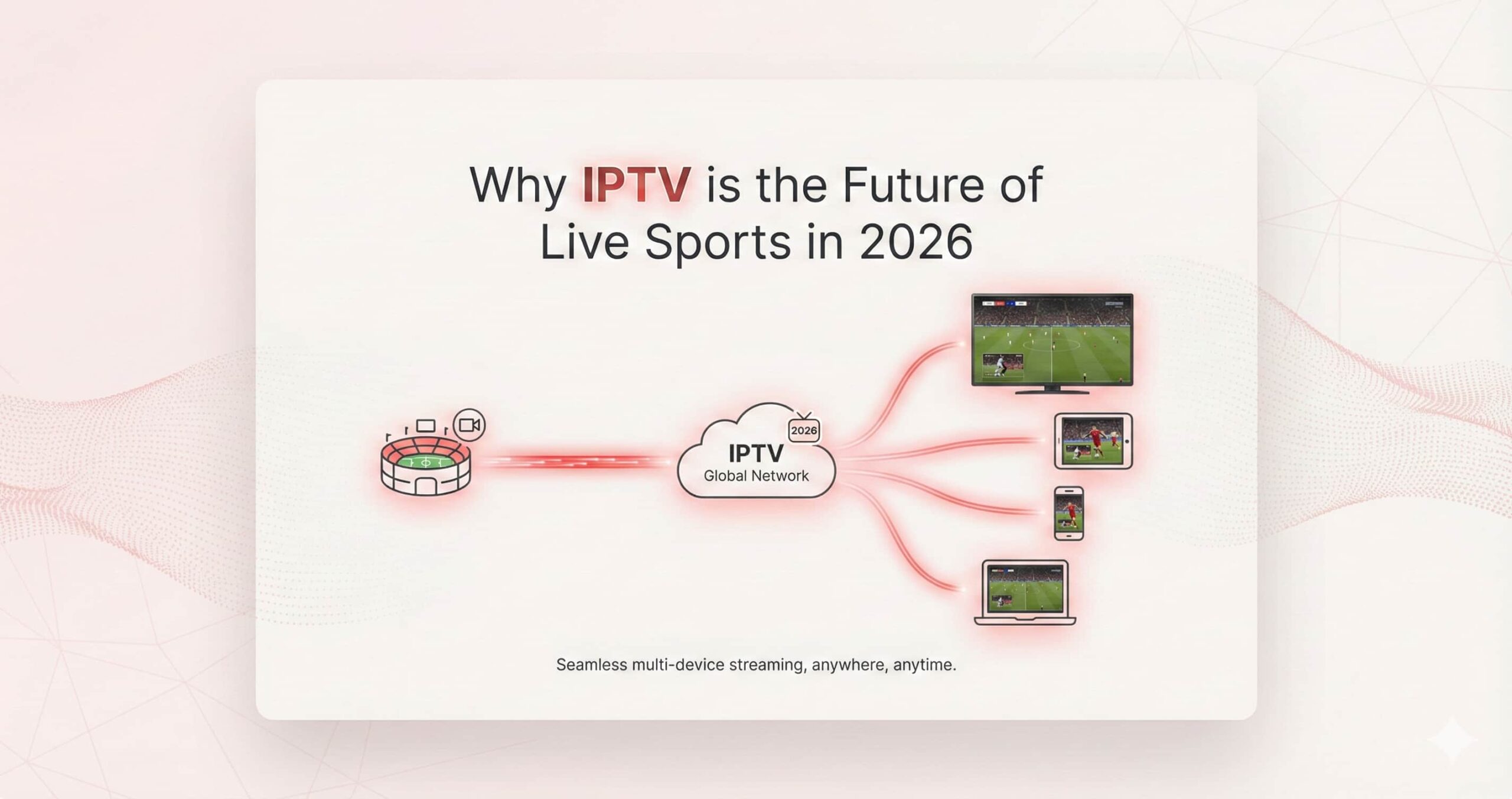
By 2026, IPTV has moved from a niche technology used by early adopters to a mainstream powerhouse capable of delivering 4K and 8K resolution, real-time statistics, and multi-angle viewing. For fans preparing for the biggest World Cup in history—spanning the USA, Canada, and Mexico—understanding why IPTV is the superior choice is no longer optional; it is the key to the ultimate viewing experience.
The Technological Shift: From Broadcast to Bitrate
To understand why IPTV is the future, we must first understand how it differs from traditional broadcasting. Traditional TV sends signals via radio waves (terrestrial), fiber-optic cables, or satellite beams. These signals are “pushed” to everyone at the same time, regardless of whether they are watching. This is a one-way, rigid system.
IPTV, however, operates on a “pull” mechanism. It uses the same internet protocols that power the web to deliver video packets. This fundamental difference allows for two-way communication, enabling the interactivity that sports fans now crave. In 2026, with the widespread adoption of 5G networks and Wi-Fi 7, the infrastructure is finally strong enough to support the massive bitrates required for live, high-action football without the lag that plagued earlier streaming attempts.
1. Unmatched Visual Fidelity: 4K, 8K, and HDR
The World Cup 2026 is expected to be a showcase for ultra-high-definition broadcasting. While many cable providers still struggle to offer more than a handful of 4K channels due to bandwidth limitations on their physical lines, IPTV is limited only by your internet speed.
- Higher Bitrates: High-quality IPTV providers in 2026 offer bitrates of 25 Mbps to 50 Mbps for 4K streams. This results in less compression, meaning the green of the pitch is sharper, and the motion of the ball is fluid.
- High Dynamic Range (HDR): IPTV easily supports HDR10+ and Dolby Vision, which provide better contrast and more realistic colors. When a match moves from a sunny part of the stadium to a shadowed area, HDR ensures you don’t lose detail.
- Future-Proofing with 8K: Leading IPTV infrastructures are already testing 8K streams for the 2026 final, offering four times the detail of 4K—something traditional cable likely won’t achieve for another decade.
2. The End of “One-Size-Fits-All” Viewing
One of the most significant reasons IPTV is dominating the 2026 sports landscape is personalization. In the past, you saw exactly what the director in the broadcast truck wanted you to see. With advanced IPTV players and services, the viewer is now the director.
Multi-View and Picture-in-Picture
The 2026 World Cup features 48 teams, meaning more concurrent matches during the group stages. IPTV allows for “Multi-View” features where you can watch up to four matches simultaneously on one screen. This is a game-changer for fans who want to keep an eye on their home team while monitoring their group rivals.
Real-Time Statistical Overlays
Modern IPTV services integrate with live data providers. As you watch the match, you can toggle an overlay that shows player heat maps, sprint speeds, passing accuracy, and “Expected Goals” (xG) in real-time. This interactive layer is something traditional broadcast signals simply cannot handle natively.
3. Economic Disruption: Value for the Modern Fan
The economics of sports broadcasting have become increasingly fragmented. To watch every game in a traditional setup, fans often need multiple expensive cable packages and premium add-ons. IPTV consolidates this into a single, affordable ecosystem.
| Feature | Traditional Cable (2026) | Premium IPTV (2026) |
|---|---|---|
| Average Monthly Cost | $120 – $200 | $15 – $30 |
| Channel Selection | Regional/Limited | Global (20,000+ Channels) |
| Contract Requirement | Often 12-24 Months | No Contract/Monthly |
| Hardware | Proprietary Box (Rental) | Universal (Firestick, Shield, Mobile) |
As shown above, the cost-to-value ratio for IPTV is significantly higher. For the price of a single stadium ticket, a fan can secure a year of global sports access, including every match of the 2026 World Cup from broadcasters around the world.
4. Mobility and the “Always-On” Fan
The World Cup 2026 will be hosted across North America, meaning matches will take place at times that may not align with the working day in Europe, Africa, or Asia. IPTV solves the “time-zone problem” through its inherent mobility and time-shifting features.
- Cloud DVR & Catch-Up: If a match starts at 3:00 AM in your time zone, IPTV services allow you to “Catch-Up” by accessing a recorded version immediately after the game ends—or even while it’s still in progress.
- Multi-Device Syncing: You can start watching a match on your Smart TV at home, continue on your smartphone during your commute, and finish on your tablet at a cafe. The stream follows you, not the other way around.
5. Solving the Latency Problem (The “Spoiler” Fix)
A common criticism of early streaming was that it was 30-60 seconds behind the live action. In 2026, technology has effectively solved this. Through the use of LL-HLS (Low Latency HTTP Live Streaming) and UDP (User Datagram Protocol) delivery, IPTV latency has been reduced to under 5 seconds—comparable to, and sometimes faster than, traditional satellite signals.
This means fans no longer have to worry about hearing their neighbors cheer for a goal before they see it on their own screen. This technical milestone is a major reason why major sports leagues are now signing multi-billion dollar exclusive deals with streaming-first platforms.
6. Global Access vs. Geo-Restrictions
Traditional broadcasters are often limited by geographic boundaries. If you are an expat living in a country where your national team’s matches aren’t being shown, you are traditionally out of luck. IPTV provides a global bridge. By offering channels from every continent, fans can watch the specific commentary and coverage of their home country, regardless of where they are physically located during the tournament.
Technical Requirements for the 2026 World Cup
To fully take advantage of what IPTV offers in 2026, fans must ensure their home setup meets the following educational standards:
- Internet Speed: A minimum of 30 Mbps for a stable 4K stream. For a 4-screen Multi-View setup, 100 Mbps is recommended, To check your internet speed you can use speed test.
- Hardware: Devices with dedicated video decoders. The Amazon Fire TV Stick 4K Max (2nd Gen) or the NVIDIA Shield Pro remain the gold standards for handling high-bitrate sports.
- Software: Using a professional-grade player like TiviMate or IPTV Smarters Pro allows for better management of EPG (Electronic Program Guides) and faster channel zapping speeds.

The Role of AI in 2026 Sports IPTV
By 2026, Artificial Intelligence has been integrated into the IPTV experience. AI-driven recommendation engines don’t just suggest “football”; they analyze your viewing habits to suggest specific matches, highlight reels of players you follow, and even “condensed match” versions that show only the action you missed. This level of curation is something traditional TV, with its linear “one channel at a time” approach, simply cannot replicate.
Conclusion: The New Standard for Fans
The 2026 World Cup will be the largest sporting event ever organized, and IPTV is the only technology capable of meeting the diverse, high-tech demands of the modern fan. With its combination of superior visual quality, interactive features, global reach, and unparalleled value, IPTV has moved from being a “cord-cutting alternative” to being the primary standard for sports consumption.
As your website grows, we will continue to provide educational resources to help you optimize your setup. The era of cable is ending; the era of the internet-connected, fan-controlled, high-definition experience has arrived. Prepare your network, upgrade your hardware, and get ready for a World Cup like no other.
Author’s Note: This article is part of our commitment to educating fans on the technical evolution of digital media. Stay tuned for our upcoming guide on “The Best IPTV Hardware for 2026.”